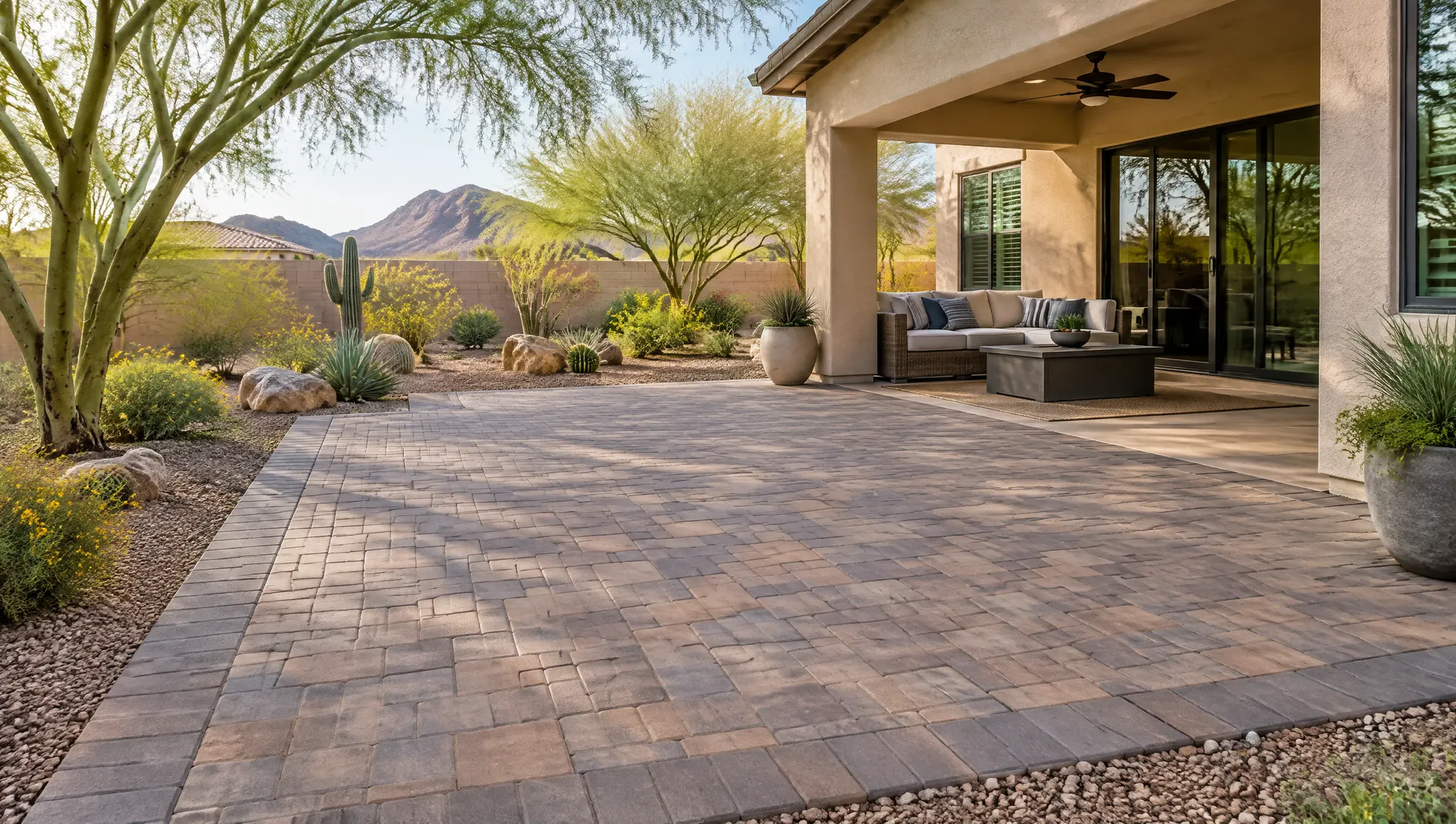
Phoenix Paver Installation
Paver Installation in Phoenix, AZ
Complete paver installs, from layout and excavation to a compacted base and locked joints.
Phoenix Paver Installation
Complete paver installs, from layout and excavation to a compacted base and locked joints.
Every paver project follows the same order: mark the layout, excavate, build and compact the base, screed the bedding sand, lay the pattern, cut the edges, set the edge restraint, compact the pavers and sweep in joint sand.
The base is what you pay for even though you never see it. Driveways need a deeper base than patios because they carry vehicles, and areas with soft fill or caliche need extra work before the base goes down.
Arizona law requires contacting Arizona 811 before any digging, and the service is free. We request utility locates before we excavate for a base, a wall footing or a gas line.
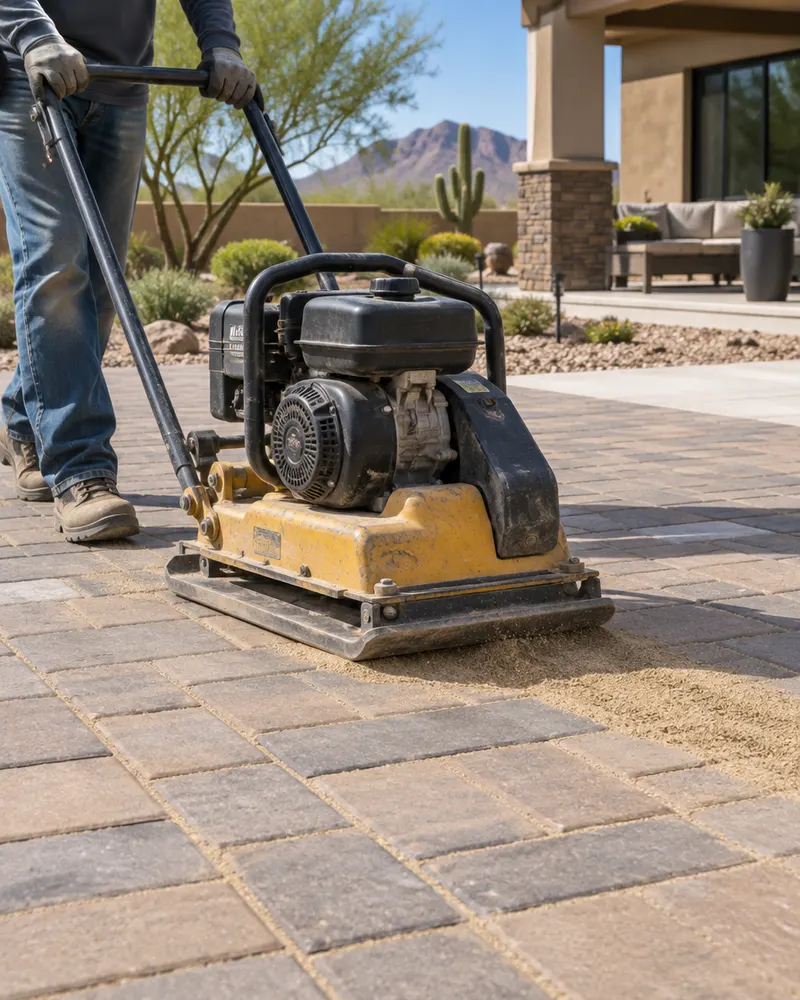
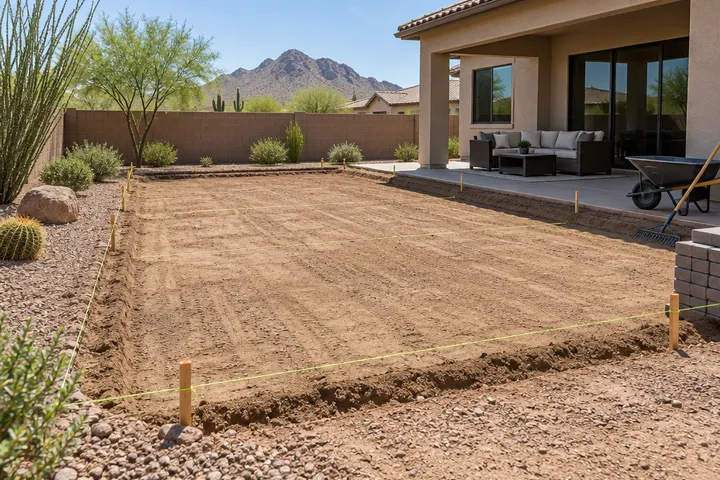
String lines, grade stakes and digging to the depth the project needs.
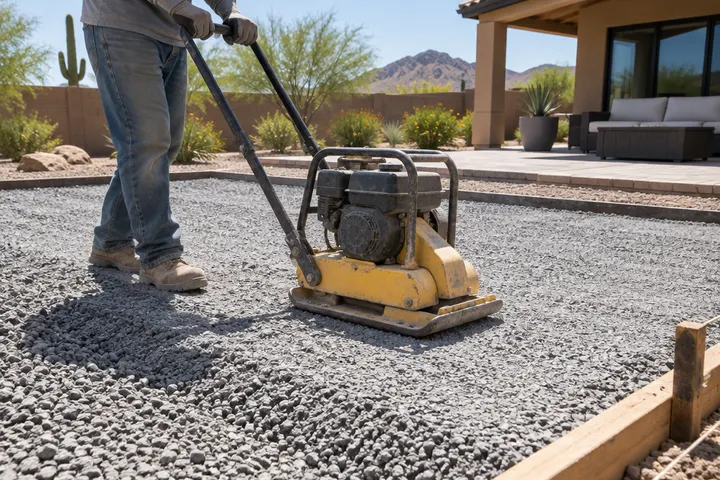
Aggregate placed and compacted in layers with a plate compactor.
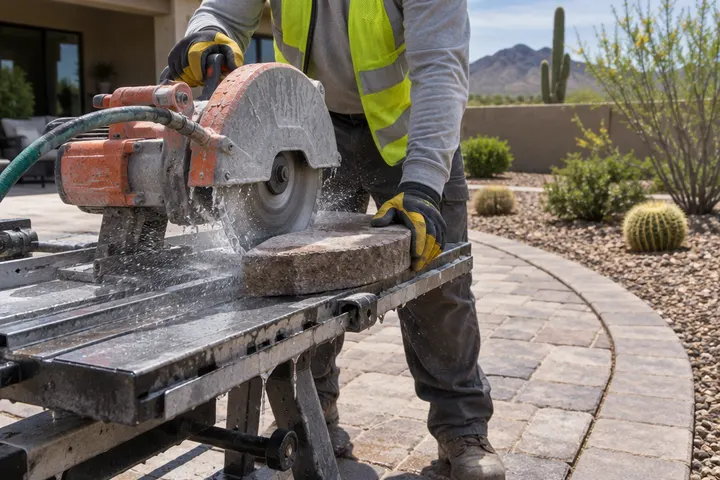
Pavers cut to fit curves, borders, drains and walls.
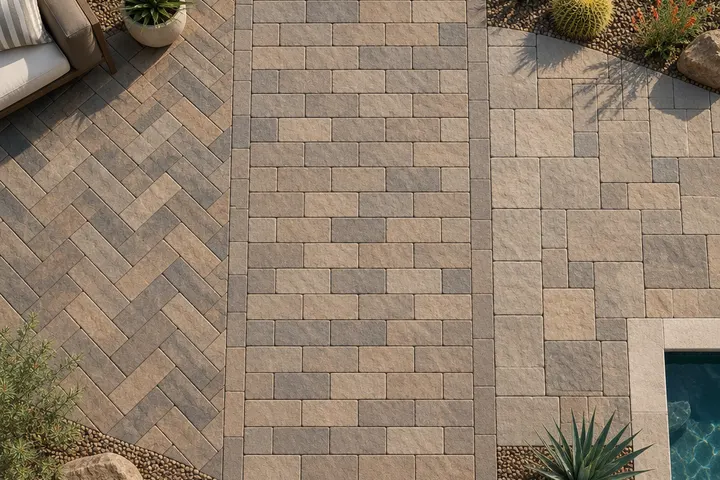
Herringbone, running bond, ashlar and borders chosen for the space.
| Cost factor | What it covers | Why it matters |
|---|---|---|
| Labor and base | Excavation, several layers of aggregate each compacted, a screeded sand bed, edge restraint and joint sand | Most of the labor goes into the foundation you never see. A properly layered base keeps pavers from sinking and shifting for years. |
| The pavers | Standard concrete pavers at the entry level, up to tumbled pavers and natural stone | Tumbled pavers are run through a machine that softens the edges and corners for an aged, weathered look, and they cost more than standard pavers. |
| Pattern and cuts | Herringbone, borders, curves and cuts around drains and walls | Detailed patterns and curves take more cutting and more time. |
| Site conditions | Removing old concrete or turf, breaking up caliche, tight gate access | Harder digging and hauling add labor before the base goes in. |
Your price mostly comes down to two things: the paver you choose and the labor it takes to build a solid, layered foundation under it. We list both separately in your written estimate, so you can compare paver options without changing the base work that keeps the project from moving.
| Project | Base | Typical extras |
|---|---|---|
| Patio or walkway | Patio-depth aggregate base | Borders, steps, lighting |
| Driveway | Deeper base for vehicles | Borders, drainage, right-of-way review |
| Pool deck | Base plus coping set on the bond beam | Drains, travertine or cool-to-the-touch pavers |
| Fire pit area | Patio base plus wall footings | Gas line, seat walls |
It mostly comes down to the paver you choose and the labor for the base. Pavers range from standard concrete at the low end to tumbled pavers, machine-finished for a weathered look, and natural stone at the high end. The base is excavated and built in compacted layers so the pavers do not shift later. Size, pattern, borders and site conditions also play a part. We give a written estimate after measuring, with each part of the job listed.
It depends on what the pavers will carry. Patios and walkways need less base than driveways, and soft or disturbed soil needs more. We set the depth for each project.
Yes. Joint sand locks the pavers together. Polymeric sand hardens and helps resist weeds and washout.
Sinking usually comes from a thin or poorly compacted base. A properly built base, compacted in layers, keeps pavers level for the long run.
Tell us what you want to build and roughly how big. We will measure and give you a written estimate.
Free estimate, no obligation